Separation
Legal Separation vs Divorce - Definitions & Differences
Curious about the difference between legal separation and divorce? Find in this article definitions of each and details on the differences between them.
For some, divorce is without a doubt what is needed to bring a marriage to an end and both spouses know it. However, this is not always the case and that is why many who are in the early stages of the divorce process find themselves asking what is the difference between legal separation and divorce.
So, for those wanting to know what the difference is between these two types of legal action, SplitUp is here to help. In the guide below, you will find clear definitions for each action as well as an outline of the key differences between them, alongside other important details that you need to know about each.
Legal Definitions
What Is Legal Separation?
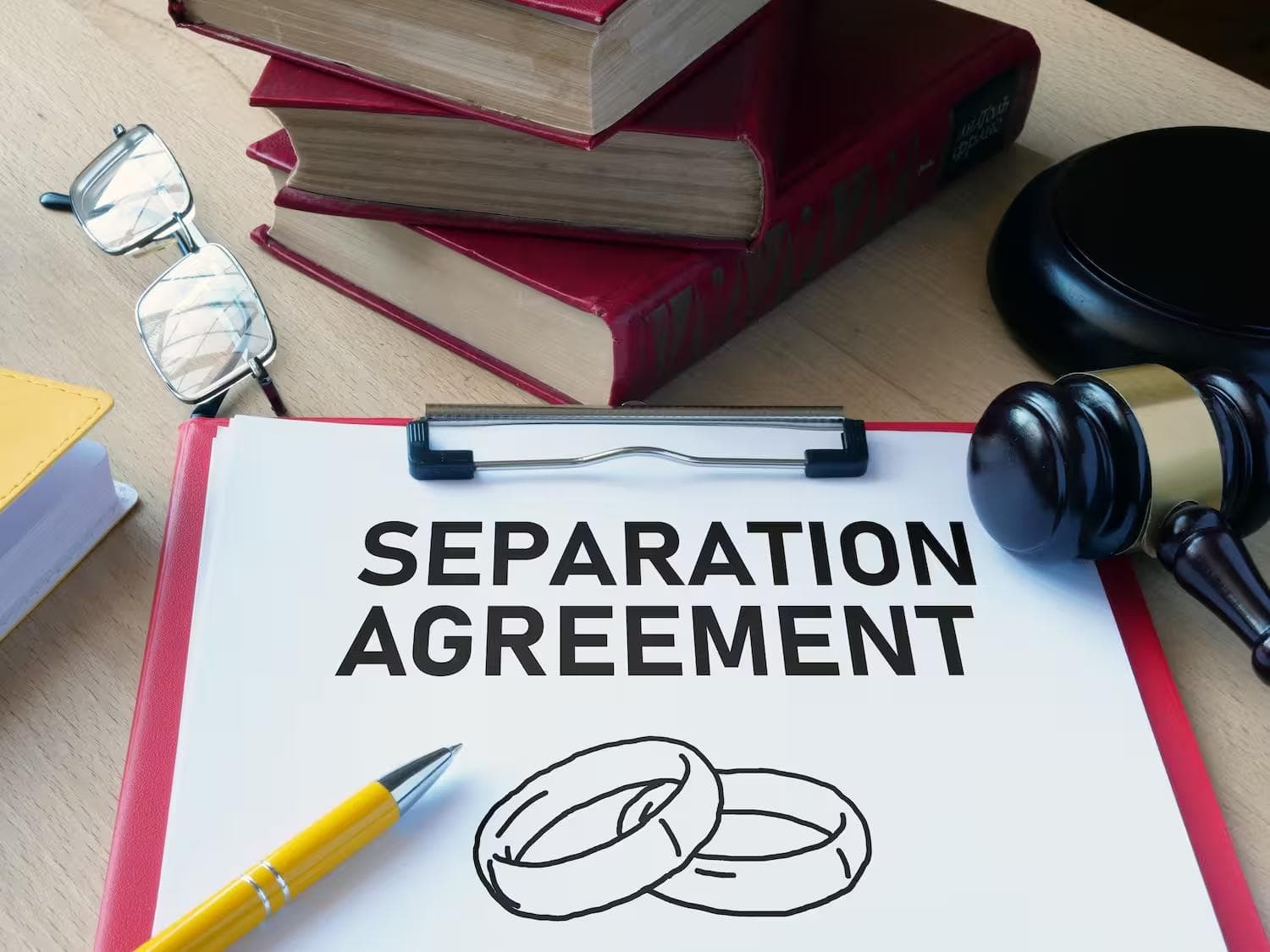
Legal separation is a type of legal action that allows both spouses to remain legally married while formally agreeing to live separately. It should be noted that not every state recognizes legal separation.
What Is a Divorce?
A divorce is a permanent, legal dissolution of a marriage which allows couples to formally bring a complete end to their marriage and move on with their lives separately.
What Is the Difference Between a Legal Separation & A Divorce?
The definitions above may help you distinguish the difference between a legal separation and a divorce, however for added clarity below we will expand on each one to really highlight the difference between these legal actions.
The key difference between the two lies in the legal standing of the marriage once each process has been drawn to a close.
When a legal separation is concluded, the marriage remains legally intact, despite the fact that the couple are separated.
With a divorce on the other hand the marriage gets fully dissolved and both spouses are seen legally as single individuals once the divorce process has concluded.
When & Why Would a Couple Choose a Legal Separation over a Divorce?
If a couple are in great need of some distance and a chance to reflect on their marriage, a legal separation is likely the right approach.
Perhaps both spouses are simply wanting some time to reflect on their life situation and how their partner fits into it, but aren’t yet ready to formally dissolve the marriage and part ways.
The hope of resolution and reconnection is often a key driver in couples choosing a legal separation over a divorce.
Perhaps one or both spouses hope that, with some physical and emotional distance, they are able to reflect and arrive at a way to overcome their relationship challenges to keep the marriage intact for the long-term.
Alternatively, many couples know all too well that divorces can be costly and not always in the best financial interest of either spouse. In such cases, the couple might decide to pursue a legal separation so they can move on with their lives without needing to formally split their assets and lose any tax and financial benefits that come with being married (providing they still apply, it should be noted that federal tax law only allows “married filing jointly” if spouses are still legally married and not legally separated under a court decree).
When children are involved you may also see instances of legal separation instead of divorce, with often financial incentives and reasons like those alluded to above being a key driver here also.
Religious and cultural attitudes and beliefs, as well as anticipated stigma and societal judgment, can also lead some couples to choose legal separation over a divorce. In such cases, spouses may feel that legal separation affords them the space that they need without compromising on their beliefs and values.
When & Why Would a Couple Choose a Divorce over Legal Separation?
While legal separation does prove useful for those couples who aren’t quite ready to legally terminate their marriage, for some couples divorce is exactly what is needed.
For example, when a couple knows that they have irreconcilable differences, differences which aren’t going to be remedied with some physical and emotional distance, divorce would likely be the best option.
Knowledge about some of the most common reasons for divorce, like infidelity, also helps highlight why a couple might decide to go straight for a divorce before even trying a legal separation. When things like infidelity (or abuse) are driving one spouse's decision making, a legal separation might make less sense and a divorce would be the most appropriate course of action.
While divorces have huge financial and emotional implications, many spouses report that they knew when this was the required legal action for their unique relationship and circumstances.
The Legal Separation Process vs the Divorce Process
Since both legal actions result in a couple parting ways (even if only temporarily in the case of some separations), the processes involved in them can be remarkably similar.
For both a divorce and a legal separation the couple will need to do things like provide details on their finances and work to come to some form of agreement for things like child care and custody (+ any associated support payments), fair division of assets and debts, and spousal support.
However, the main difference in process between the two can be found at the start. At the start of a divorce the petitioning spouse will file to formally end the marriage. Since in a legal separation the couple will remain legally married, there is no such step.
Keep in mind that, even when there is hope of reconciliation and coming back together in the future, for a legal separation a couple will still need to go to court to establish a legal basis and agreements surrounding their assets and debt, child custody and spousal support.
Should I Choose Legal Separation or Divorce?
Unfortunately the answer to this question will need to be determined by you alone, potentially with input from your spouse.
The right legal approach will depend entirely on your unique circumstance as well as your views surrounding divorce and what is best for you and any dependents.
While we can’t provide you with a recommendation for either course of action, we can provide you with all of the support and guidance that you need to navigate either legal process. Download the SplitUp app and gain access to a wealth of content and information that will help you navigate your divorce or legal separation with confidence.
Conclusion
By this point you will know the difference between a divorce and a separation, and even have a better understanding of why some couples choose one over the other. We have discussed how the processes overlap and differ, and outlined some of the factors that help determine which one is the right option for them and their marriage.
If you have any further questions or would like to see something added to this article, please get in touch. If you now know which action is the right one for you, be sure to download our app to start navigating the full process and learning about all things family law-related.